Celebrated local author Alan Garner has published a new book with a chapter explaining the dark background to his award-winning ‘Thursbitch’ novel and its links to the John Turner memorial stone.
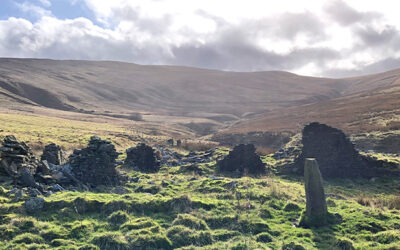
Valley of the Demons
read more

Celebrated local author Alan Garner has published a new book with a chapter explaining the dark background to his award-winning ‘Thursbitch’ novel and its links to the John Turner memorial stone.
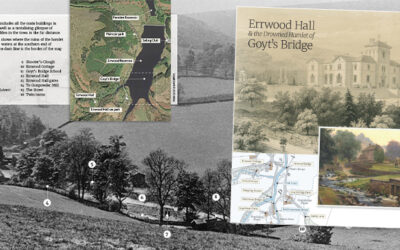
After years of collecting photos and stories for this website, my book ‘Errwood Hall & the Drowned Hamlet of Goyt’s Bridge’ has arrived from the printers – 52 full-colour pages of photos and maps.
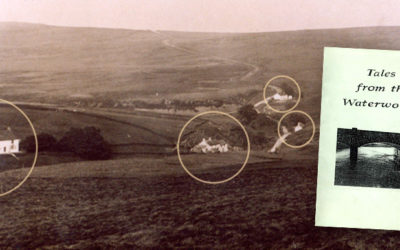
I’ve finally made a start on scanning a fascinating collection of photos and documents which were once displayed in the Derbyshire Bridge Rangers’ hut. Here’s the first batch…
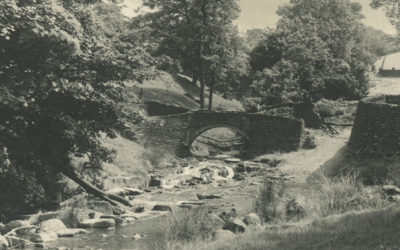
The final part of Crichton Porteous’s ‘Goyt Recollections’ provides a fascinating picture of the valley in the mid 1950s, describing the area all the way from Goyt’s Bridge to Taxal.
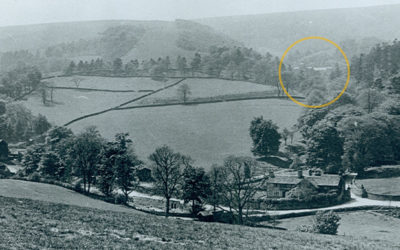
In part two of Crichton Porteous’s ‘Goyt Recollections’, he writes about Errwood Hall, the hill-top graveyard and the coal mine. He also talks to an old estate worker about the Grimshawe sisters.
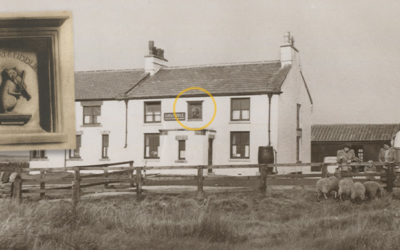
Crichton Porteous was known as ‘the Thomas Hardy of Derbyshire’. This is the first of three parts reproducing a chapter from his popular 1954 book, Peakland, and titled ‘Goyt Recollections’.
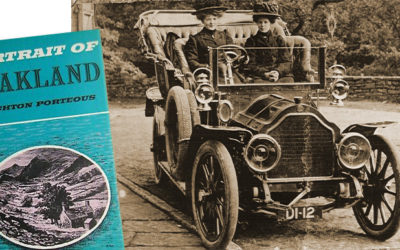
A brief extract from a 1963 book includes a report of a ghostly encounter at Errwood Hall: “It beckoned with its long arms to me, and, pointing up the path, it ran with its hollow eyes holding me spell-bound”.
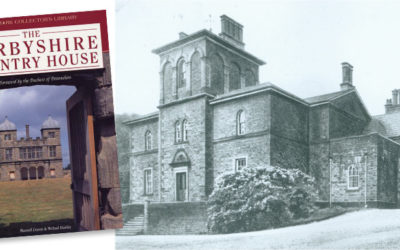
A description of Errwood Hall in a popular coffee-table book says it’s “probably the most romantic location in Derbyshire”. It contains some fascinating details, but quite a few inaccuracies.
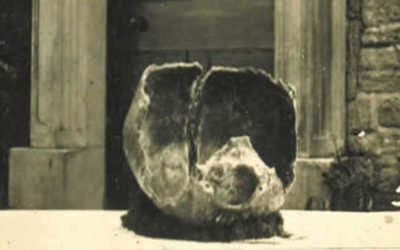
The mystery of Tunstead Dickie’s skull, as told by Clifford Rathbone in 1955. This mysterious artefact, accredited with ghostly properties, seems to have completely vanished.
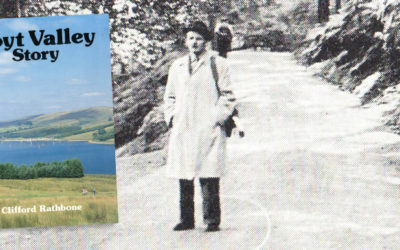
Clifford Rathbone’s ‘Goyt Valley Story’ was first published in 1955 as a collection of articles written for the Macclesfield Express. The complete book is now available to read in full as a pdf.
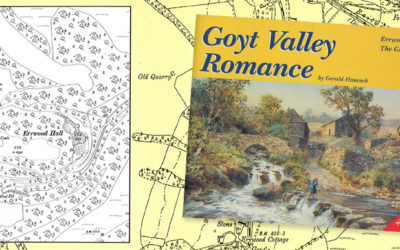
For anyone who’s tried in vain to track down Gerald Hancock’s ‘Goyt Valley Romance’, it’s now available to read in full on this website. Along with his slightly shorter first edition.
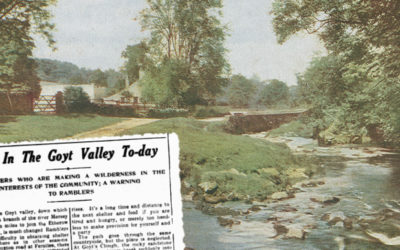
A 1937 newspaper article published just before the opening of Fernilee Reservoir tells of a glorious landscape that has been lost forever – wrecked in the interests of the community.
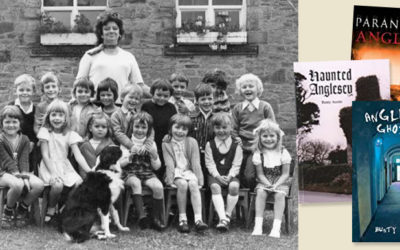
Chris remembers ‘Bunty’ Sidebottom, a very special teacher at Fernilee Infant School: “She was extremely glamorous and had friends in high places in TV land: the BBC and Granada, Manchester.”
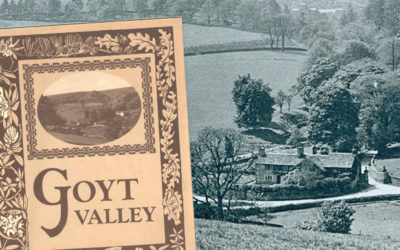
Published in the late 1970s, this pocket guide to the Goyt Valley contains some fascinating information, with topics ranging from rock formations to the Chilworth Gunpowder Mill.
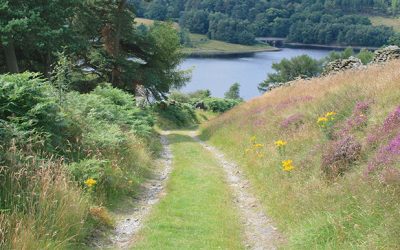
The last poem written by Roland Leighton was delivered to his fiancé, Vera Brittain, along with his blood-stained uniform. It may have celebrated a walk the two lovers made along Old Goyt’s Lane.
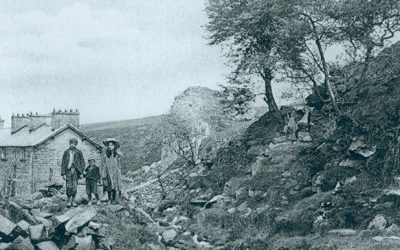
A newspaper article from 1857 includes some wonderful detail about the paint mill at Goytsclough. But also disproves most of my assumptions about the giant waterwheel which once stood here!
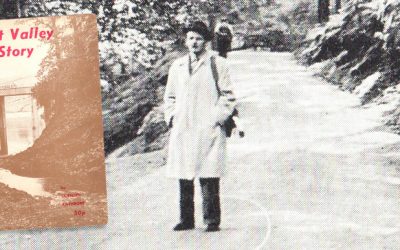
The first chapter of Clifford Rathbone’s ‘Goyt Valley Story’ describes a walk he made in the summer of 1955 from the Cat & Fiddle to Goyt’s Bridge, before the flooding of Errwood Reservoir.
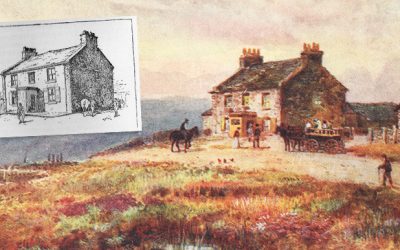
The date is the 4th of May, 1888: “A carriage from Buxton passes us just before we reach the Cat and Fiddle. Its inmates, although covered with shawls and rugs, are shivering with cold.”
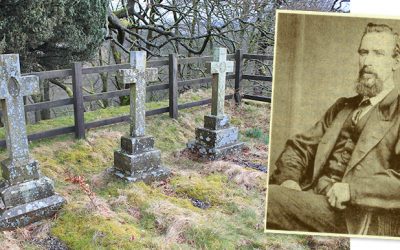
Captain John Butler has always fascinated me. He was the Master of the Grimshawe’s ocean-going yacht, The Mariquita, and is buried in the hill-top cemetery above the ruins of Errwood Hall.
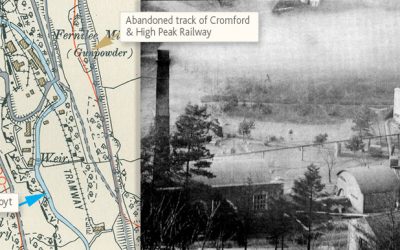
“Machinery was twisted into all shapes and huge beams splintered. Pieces of iron had been thrown high up on the hills and one piece of machinery weighing well over a ton was flung into the water.”
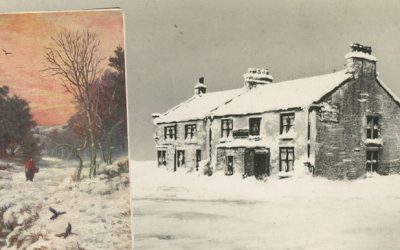
The Goyt Valley in winter can be a truly magical place. A poem written in 1884 celebrates a walk from a ‘lone hostel on the barren moor’ which must have been the Cat & Fiddle Inn.
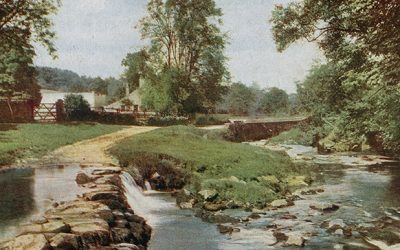
In previous times the Goyt Valley was known as ‘The Dale of The Goyt’. Written in 1908, this poem describes the natural beauty which inspired poets, writers, photographers and painters.
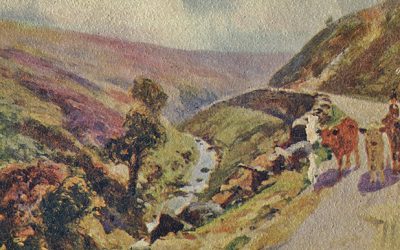
An account of a walk in the late 1890s from Buxton, via Burbage, Derbyshire Bridge and Goytsclough, to Goyt’s Bridge and Errwood Hall. It includes some wonderful detail.
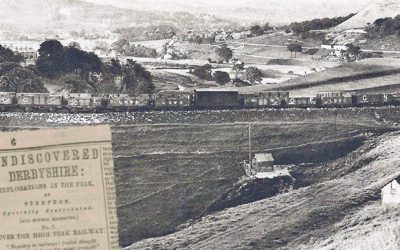
The Cromford & High Peak Railway ran through the Goyt Valley from 1831 to 1892. Mike has discovered a fascinating report from the Victorian writer, Strephon, of a trip along the entire route.
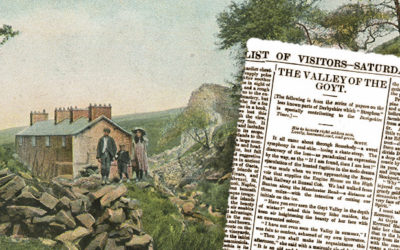
Another of Strephon’s wonderful articles describing his walks through the Goyt Valley. This one tells of a circular walk from Buxton, via Goyt’s Bridge and Derbyshire Bridge, taken in early 1880.
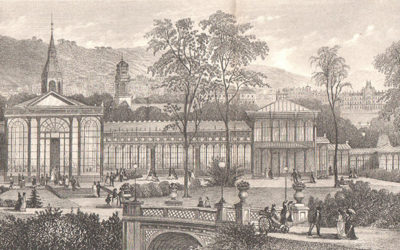
Strephon’s articles describing his travels in the Goyt Valley in the early 1880s are very popular. It’s a very Victorian style, but well worth the effort. Mike has managed to discover some facts about the author.
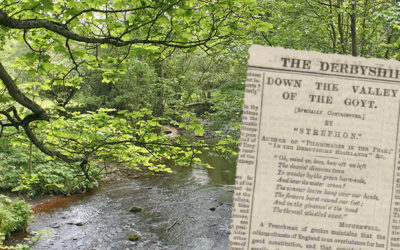
Our 19th century travellers are “soon in the deep cool solitude of the Goyt valley, beautiful with colours that the miserably inadequate art of word-painting is utterly lost to reproduce.”
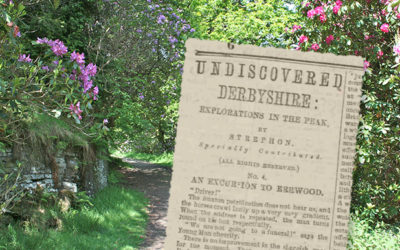
A writer in 1880 describes the Goyt Valley: “Boughs interlace above; the bare-bell, the fox-glove, and the blade-like fern are at out feet; at our side the beautiful campanula…”
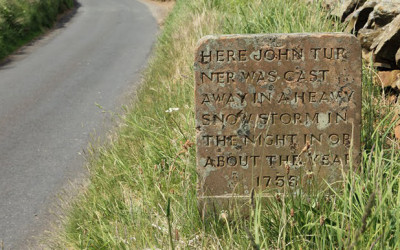
A mile or two southwest of Jenkin Chapel stands an intriguing stone memorial to John Turner. But who was the mysterious lady who left a single footprint beside his frozen body?
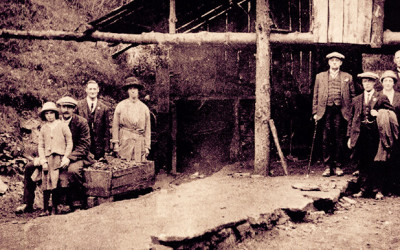
Old OS maps show a ‘Coal Pit’ between Errwood Hall and Castedge Farmhouse. The entrance to the mine has long since been blocked and is now covered by thick undergrowth.