Forestry England has recently closed off the popular parking areas at Goytsclough with a long row of large boulders in an attempt to stop what they call ‘antisocial behaviour’.
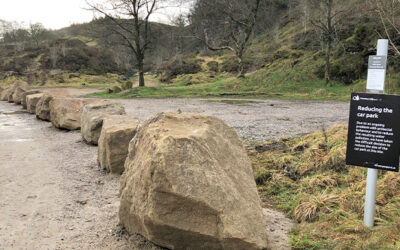
Goytsclough parking closed
read more

Forestry England has recently closed off the popular parking areas at Goytsclough with a long row of large boulders in an attempt to stop what they call ‘antisocial behaviour’.
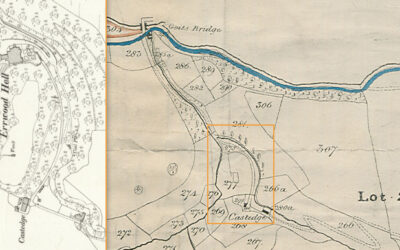
A detailed map published in 1832 for the sale of land in the Goyt Valley is the oldest I’ve seen. It must have been at this auction that Samuel Grimshaw purchased the land on which he’d build Errwood Hall.
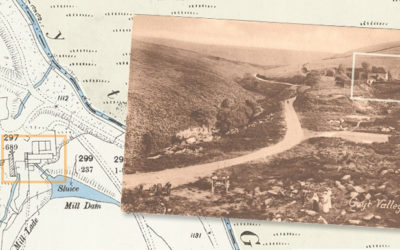
An even older photo of Goytsclough shows the paint mill ruins in greater detail. It hopefully brings me one step closer to discovering where the giant waterwheel once stood.
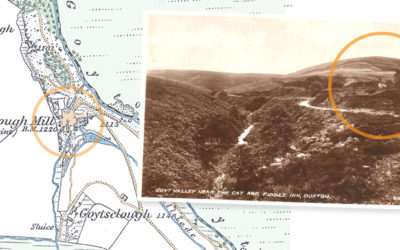
An old postcard of Goytsclough provides another small but tantalising clue in the puzzle over the giant waterwheel that once powered both the stone quarry and the later paint mill.
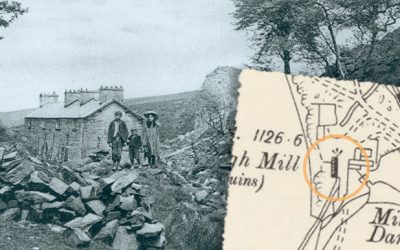
A new ‘then & now’ fade of one of my favourite old photos of the valley helps pinpoint exactly where the cottages at Goytsclough once stood. And it’s not where I thought!
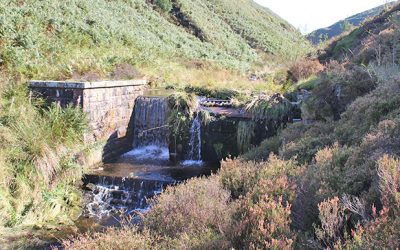
Walking the lade from Goytsclough to the Goyt was the only way I was going to work out how water seemed to defy gravity to feed the giant waterwheel. It seems appearances can be very deceptive!
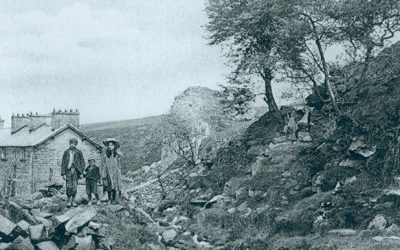
A newspaper article from 1857 includes some wonderful detail about the paint mill at Goytsclough. But also disproves most of my assumptions about the giant waterwheel which once stood here!
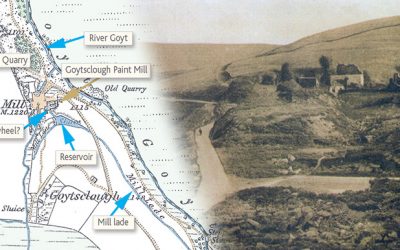
Was there once a giant waterwheel at Goytsclough that was reputed to be the second largest in the world? It seems more than a little unlikely, but I’m trying to discover the facts.
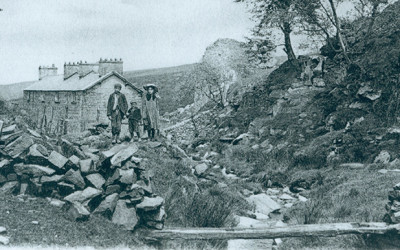
The Goytsclough Paint Mills provided employment for around 20 people. Crushed baryte was packed in bags and taken by wagon to be loaded onto the High Peak Railway.